Egg case to adult
Mantises hatch from a foam egg case, look like small adults from the start, and get their wings at the very last moult.
The egg case
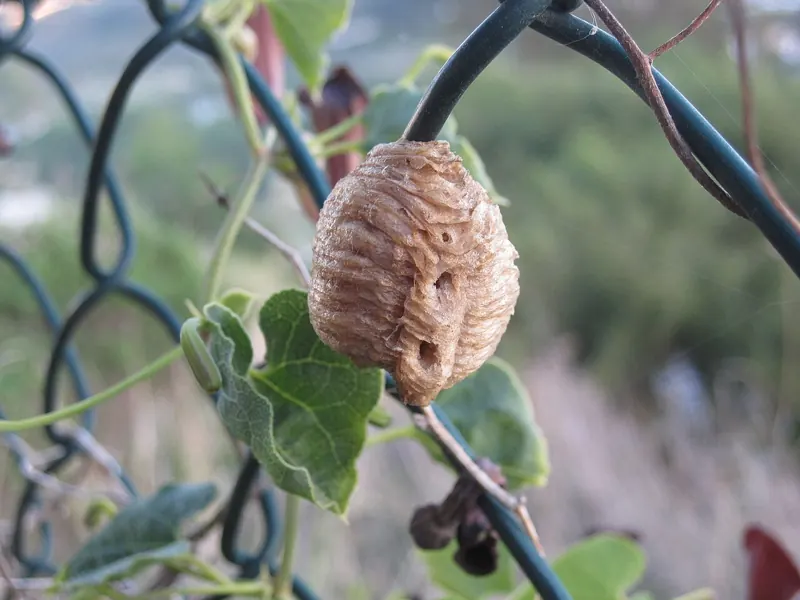
A female mantis lays her eggs in a mass called an ootheca. It is frothy when first laid and quickly hardens. Amateur Entomologists’ Society: Praying Mantids (Order Mantodea) The froth hardens into a case a bit like polystyrene, glued to a twig, fence post or other support. The Canadian Encyclopedia: Mantid
Most egg cases are fixed to plants, but some are stuck to rocks, or in deserts pushed into grooves in the sand. Britannica: Mantis A female usually lays several egg cases, often about six. Amateur Entomologists’ Society: Praying Mantid caresheet
- Britannica says a female lays from fewer than 10 to more than 300 eggs in a batch. Britannica: Mantis
- Utah State University Extension gives 12 to 400 eggs per egg case. Utah State University Extension: Beneficial insects, mantids
- The Amateur Entomologists’ Society says one egg case may produce 30 to 300 young, depending on the species. Amateur Entomologists’ Society: Praying Mantid caresheet
- For the Chinese mantis, NC State Extension gives 50 to 600 eggs. NC State Extension: Chinese praying mantid
It depends on the species, and the sources count slightly different things: eggs in a batch, eggs per case, or young hatching. The NC State figure is for the Chinese mantis only. Every disagreement we found →
Waiting out the winter
In cooler places the eggs spend the winter in the case and hatch in spring. The Canadian Encyclopedia: Mantid Utah State University Extension describes one generation a year: eggs laid in autumn hatch in spring, and the young are adults by late summer. Utah State University Extension: Beneficial insects, mantids
Bringing an egg case indoors over winter is a bad idea: the warmth can make the young hatch early, when there is no food for them. Amateur Entomologists’ Society: Praying Mantid caresheet NC State Extension warns the same: hatched indoors in winter, the hungry young soon start eating each other. NC State Extension: Chinese praying mantid If you want to watch an egg case, the Amateur Entomologists’ Society suggests an unheated building such as a shed, so the young hatch at the right time. Amateur Entomologists’ Society: Praying Mantid caresheet
Hatching
The young all come out at the same time. Britannica: Mantis Newly hatched young hang from the egg case on a thread until their skin hardens. Amateur Entomologists’ Society: Praying Mantid caresheet
Young mantises often eat each other. Utah State University Extension: Beneficial insects, mantids
Nymphs
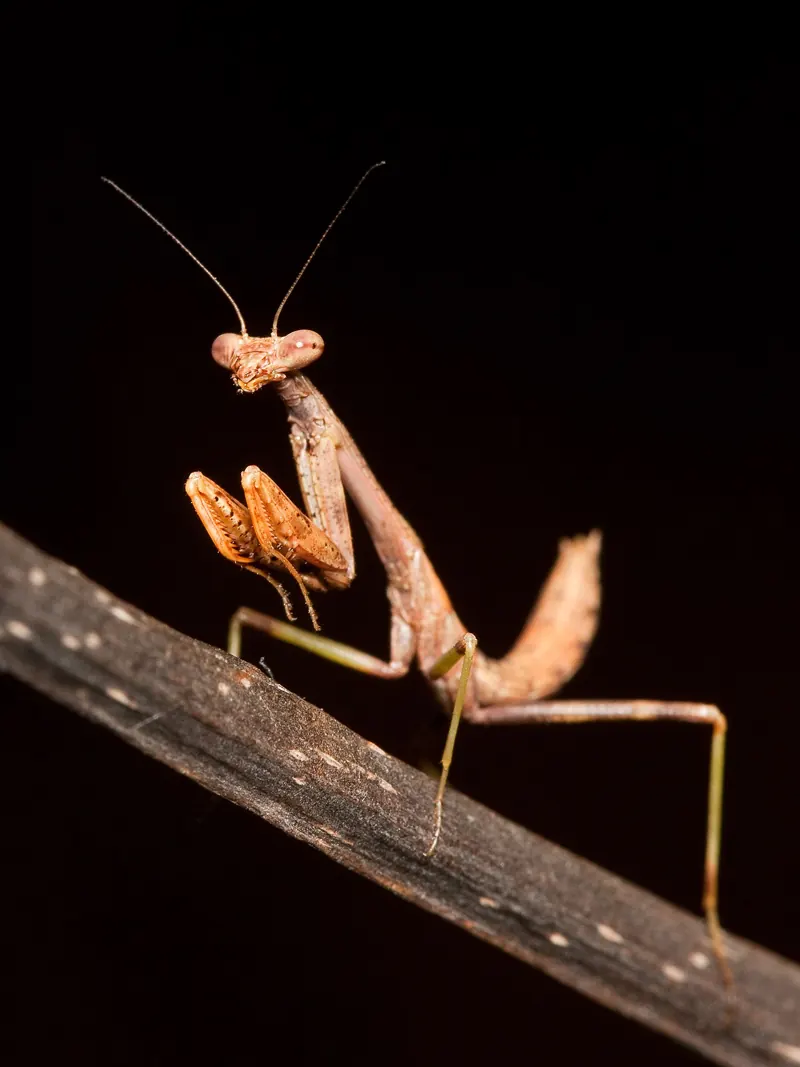
Mantises have no caterpillar or pupa stage. The young, called nymphs, look like small adults without wings. Amateur Entomologists’ Society: Praying Mantid caresheet
Young Chinese mantises moult six or seven times as they grow. NC State Extension: Chinese praying mantid Older nymphs have little wing buds. NC State Extension: Chinese praying mantid
The wings appear only at the final moult. Amateur Entomologists’ Society: Praying Mantids (Order Mantodea) A young mantis that loses a leg can grow it back, but only at its next moult. Adults with wings don’t moult again, so they can’t. Amateur Entomologists’ Society: Praying Mantid caresheet
Adults and mating
Some species can lay a fertile egg case without mating. Amateur Entomologists’ Society: Praying Mantid caresheet
- It’s often said that female mantises always eat their mates, but studies suggest this isn’t commonly seen in the wild. Amateur Entomologists’ Society: Praying Mantids (Order Mantodea)
- The Canadian Encyclopedia says it is probably uncommon in the wild and more likely when females are hungry. Males approach slowly and freeze if the female moves. The Canadian Encyclopedia: Mantid
- Utah State University Extension describes females trying to eat the male before, during or after mating, and males approaching carefully. Utah State University Extension: Beneficial insects, mantids
It does happen, but the sources differ on how often. Two say it seems uncommon in the wild; one describes it without saying how often. Every disagreement we found →
How long they live
- The Amateur Entomologists’ Society gives an average lifespan of twelve months. Amateur Entomologists’ Society: Praying Mantids (Order Mantodea)
- Its caresheet says mantises live for 12 to 18 months. Amateur Entomologists’ Society: Praying Mantid caresheet
Both figures are from the same society: one an average, one a range. Every disagreement we found →
Next: the species →