8 mantises worth meeting
Out of around two thousand kinds, here are 8, from Europe, North America, Australia and Asia.
Most mantises live in tropical or subtropical places. Britannica: Mantis Eighteen species live in southern and central Europe. Amateur Entomologists’ Society: Praying Mantids (Order Mantodea) · checked 31 Oct 2026
- Britannica calls the Chinese mantis Tenodera aridifolia sinensis. Britannica: Mantis
- NC State Extension calls it Tenodera sinensis. NC State Extension: Chinese praying mantid
- The Canadian Encyclopedia calls it Tenodera aridifolia. The Canadian Encyclopedia: Mantid
Scientists don’t all agree on how to name this mantis, so you’ll see all three in books and on websites. We use Tenodera sinensis, as NC State Extension does. Every disagreement we found →
- About 80% of Australian mantises belong to one family, the Mantidae. Australian Museum: Praying mantises (Order Mantodea) · checked 31 Oct 2026
- The Australian Museum’s garden mantid page puts the same family at almost 75% of Australian species. Australian Museum: Garden Mantid · checked 31 Oct 2026
Two pages on the same museum site give different shares. Every disagreement we found →
Counts and ranges can change; those facts carry the date we checked them (31 Oct 2026).
Europe
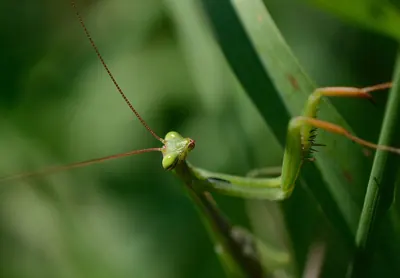
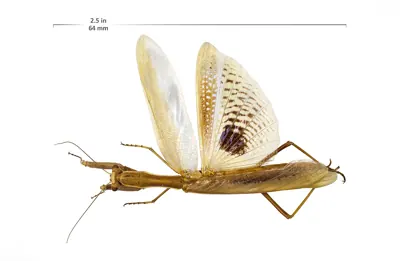
Eighteen species live in southern and central Europe. None live wild in Great Britain.
North America
Some native, some brought in from Europe and Asia.
Australia
About 118 species, two of them common in Sydney gardens.
Asia
The flower that hunts.
No. 01 · Mantis religiosa
European mantis
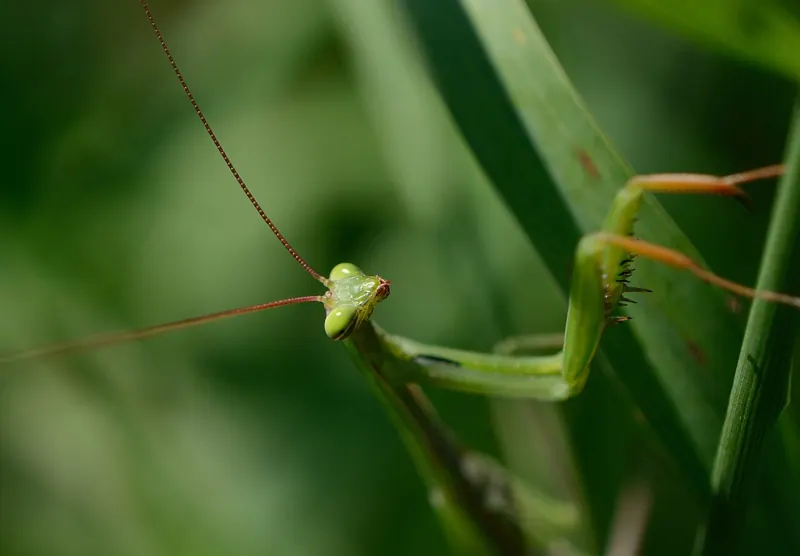
- The European mantis is the most widespread mantis in Europe. Britannica: Mantis
- Adults are brown or green with a black spot on the front legs, and 50 to 65 mm long. Utah State University Extension: Beneficial insects, mantids
- When it rears up, it shows black-ringed white spots on the inside of its front legs, a mark no other North American species has. The Canadian Encyclopedia: Mantid
- It feeds actively by day and likes mixed vegetation. Utah State University Extension: Beneficial insects, mantids
- It arrived in New York State from Europe, unintentionally, in 1899. The Canadian Encyclopedia: Mantid
No. 02 · Iris oratoria
Mediterranean mantis
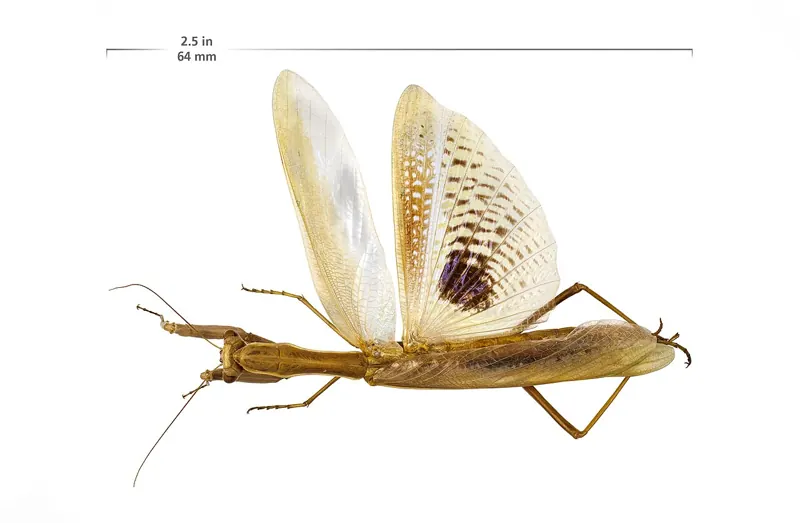
- The Mediterranean mantis (Iris oratoria) is a European species that has been introduced into North America. Britannica: Mantis
- Typical European groups (genera) are Mantis, Ameles, Iris and Empusa. Britannica: Mantis
No. 03 · Tenodera sinensis
Chinese mantis
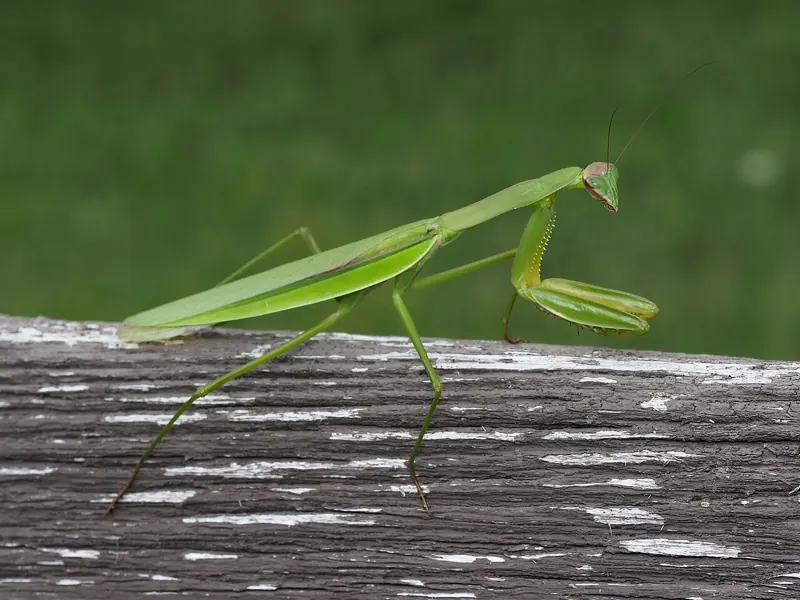
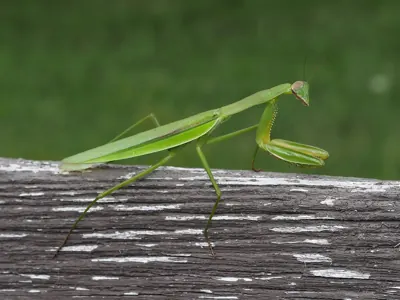
- The Chinese mantis is slender, brown or green, and about 7.6 cm (3 inches) long for males and about 11 cm (4⅜ inches) for females. NC State Extension: Chinese praying mantid
- It is the largest mantis found in North America, at 7 to 10 cm. Britannica: Mantis
- The Chinese mantis can swivel its head 180 degrees. NC State Extension: Chinese praying mantid
- Female Chinese mantises can’t fly. NC State Extension: Chinese praying mantid
- It was brought to eastern North America from China in 1896 to control insect pests. The Canadian Encyclopedia: Mantid
- The Chinese mantis eats almost any animal it can overpower, including butterflies, crickets, flies, grasshoppers, moths and spiders. NC State Extension: Chinese praying mantid
No. 04 · Stagmomantis carolina
Carolina mantis
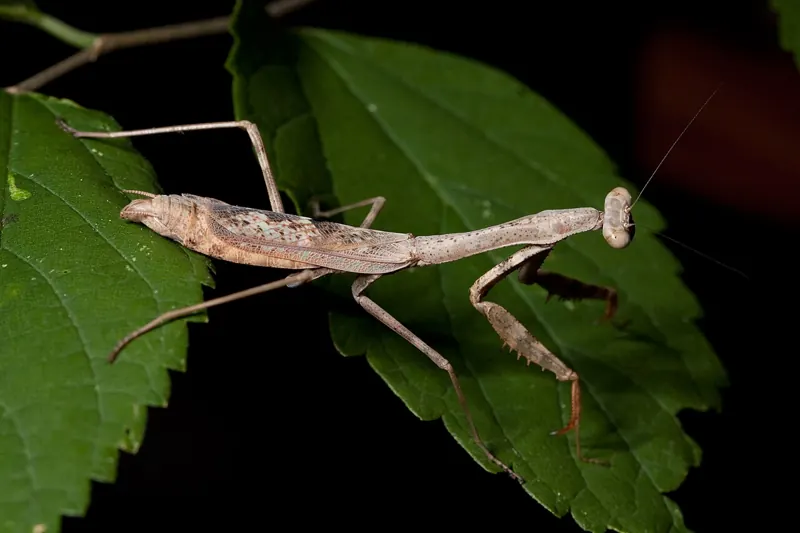
- The Carolina mantis is widespread in North America. Britannica: Mantis
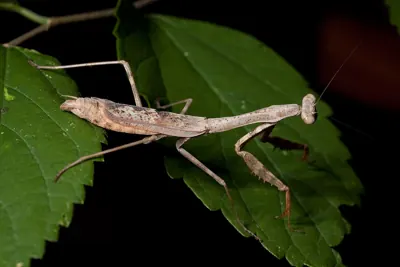
- Adults are 48 to 57 mm long and dusty brown, grey or green, found in meadows, gardens, herbs and low shrubs. Utah State University Extension: Beneficial insects, mantids
No. 05 · Litaneutria minor
Ground mantis
We haven’t found a public domain or CC0 photo of this one that we can be sure is labelled correctly, so there’s no picture yet.
- The ground mantis is a small species from western North America, and the only mantis native to Canada. Britannica: Mantis
- It ranges from Mexico north to British Columbia; in Canada it lives only in the dry grasslands of the southern Okanagan Valley. The Canadian Encyclopedia: Mantid
- Males have wings; females have small wings that don’t work. Its mottled brown colour looks like a twig. The Canadian Encyclopedia: Mantid
No. 06 · Orthodera ministralis
Garden mantid
We haven’t found a public domain or CC0 photo of this one that we can be sure is labelled correctly, so there’s no picture yet.
- The garden mantid is probably the most common mantis seen in Sydney. It lives in suburban gardens and is found throughout Australia. Australian Museum: Garden Mantid
- It is about 4 cm long, blue-green, with a bright blue to purple spot on the inside of its front legs. Australian Museum: Garden Mantid
- It eats small insects, including aphids. Australian Museum: Garden Mantid
- Its egg case is about 2 cm long, hard and woody, and often stuck to fences, buildings, fly screens or plants. Australian Museum: Garden Mantid
No. 07 · Tenodera australasiae
Purple-winged mantid
We haven’t found a public domain or CC0 photo of this one that we can be sure is labelled correctly, so there’s no picture yet.
- The purple-winged mantid is 8 to 9 cm long and common in Sydney gardens. It is found throughout Australia. Australian Museum: Purple-winged Mantid
- It waits among native flowering plants and feeds mainly on bees and flies. Australian Museum: Purple-winged Mantid
No. 08 · Hymenopus coronatus
Orchid mantis
We haven’t found a public domain or CC0 photo of this one that we can be sure is labelled correctly, so there’s no picture yet.
- Like other mantises, the orchid mantis (Hymenopus coronatus) grabs its prey with its front legs and will eat many kinds of prey. O’Hanlon 2016, Current Biology quick guide: Orchid mantis
- The orchid mantis has four back legs widened into flat ‘petals’, so it looks remarkably like a white flower. O’Hanlon 2016, Current Biology quick guide: Orchid mantis
- Young orchid mantises may be white or pink, and blend in perfectly with orchid flowers. Natural History Museum, London: Small orders collection (Mantodea)
- In field experiments, lone orchid mantises attracted pollinating insects even more often than real flowers did, and caught them. O’Hanlon, Holwell & Herberstein 2014, The American Naturalist (peer-reviewed, via PubMed): Pollinator deception in the orchid mantis
- Despite the name, there’s no good evidence it copies an orchid, or any one particular flower: it looks like a general ‘flower’. O’Hanlon 2016, Current Biology quick guide: Orchid mantis
- Orchid mantises have been reported across Malaysia, Indonesia, India, Thailand, Vietnam and southern China, but are rarely seen in the wild. O’Hanlon 2016, Current Biology quick guide: Orchid mantis
Mantis, mantid, or both?
Strictly, ‘mantis’ is the name of one genus, Mantis; ‘mantid’ covers the whole group. Utah State University Extension: Beneficial insects, mantids Most entomologists prefer to keep the word mantis for members of the genus Mantis. The Canadian Encyclopedia: Mantid
On this site we use “mantis” for the whole group, as most of our sources do in their headings.